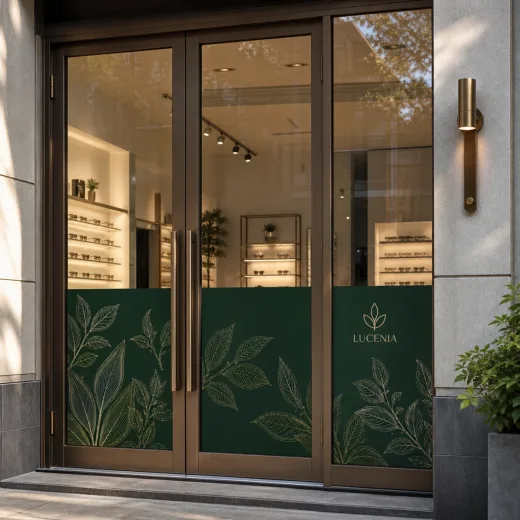
White and color layer control
Build solid, high-contrast graphics from white and color layers; unprinted glass remains clear.
Application image: Architectural glass printing application image.
Create opaque decorative, branded, and privacy graphics on glass and architectural panels with direct-to-substrate UV printing.
Share your artwork and substrate details. We aim to respond within one business day with the next validation step.
Glass printing requires control of ink adhesion, opaque white-and-color coverage, registration, and the finished installation environment. Develop the print stack on the actual glass construction for retail doors, office partitions, or kitchen splashbacks; unprinted glass remains clear.
Build solid, high-contrast graphics from white and color layers; unprinted glass remains clear.
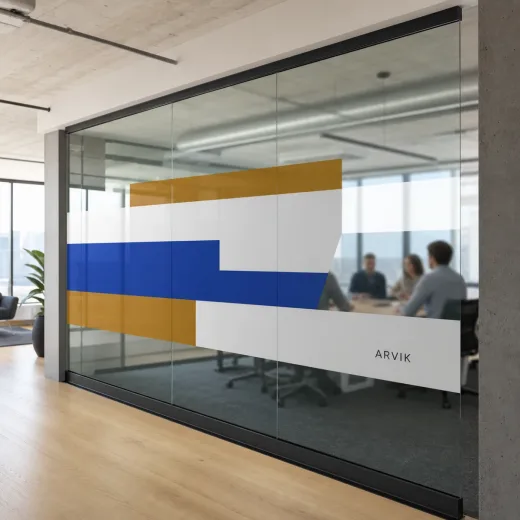
Support retail doors, office partitions, kitchen splashbacks, and architectural features with repeatable opaque graphics.
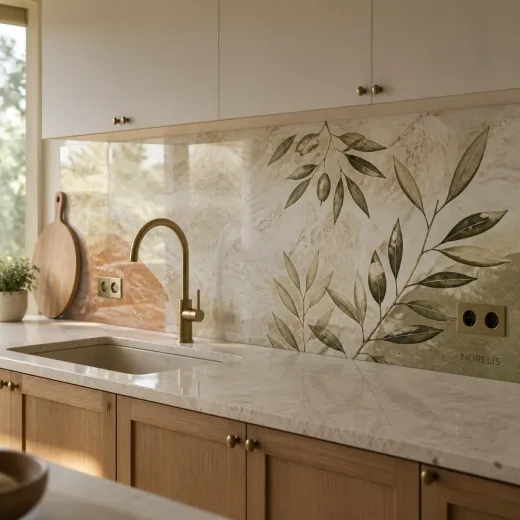
Approve the complete print, glass, cleaning, handling, and mounting combination before rollout.
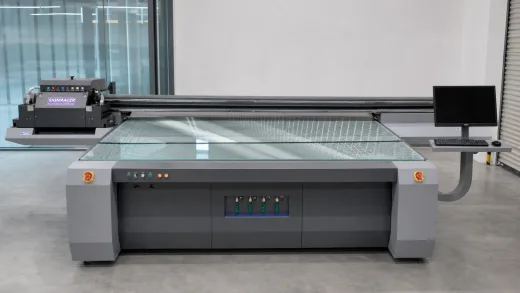
A large flatbed workflow for architectural panels and repeatable glass decoration.
View printer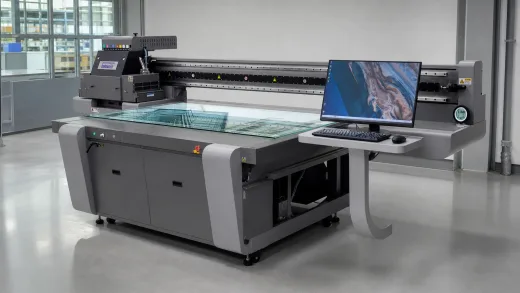
A compact platform for glass samples, small panels, and application development.
View printerYes, when the glass surface and ink system are qualified together. Adhesion, cleaning, handling, and installation tests should be defined for the finished construction.
Yes. White ink supports opaque, high-contrast graphics and controlled multilayer effects. The printed ink coverage is opaque; only unprinted glass remains clear.
Typical applications include decorative panels, partitions, doors, retail interiors, privacy graphics, and architectural branding, subject to qualification.
Share your glass type, artwork, viewing requirements, and installation conditions to plan a representative sample run.
Request test prints and work with our application team on a validation plan for your production targets.